
- Compare agents
- Online valuation
- Explore my area
- Home toolkit
- News & guides


- Estate agents by area
- Sold house prices by area
- Estate Agent ValuationRequest an in-person valuation with an agent to discover your property's true market value.
- Online Valuation ToolGet a free instant estimate of your home's value.
- EPC CheckerFind out if your home has a valid Energy Performance Certificate.
- Listing MonitorAlready on the market? See how your online property advert is performing.
- Estate Agent Fee CalculatorSee typical local agent fees, including VAT.
- Cost of Selling CalculatorPlan your budget for agent fees, legal work and moving.
- Stamp Duty CalculatorEstimate SDLT, LBTT or LTT for your next purchase.
- Selling guides
- Estate agent guides
- Mortgage advice
- Conveyancing guides
- Property news See All News & Guides
Agent shortlist
HouseWorth
- What Is a Semi-Detached House? A 2026 UK Buyer's Guide
Advice about properties26 May 2026
What Is a Semi-Detached House? A 2026 UK Buyer's Guide
Kimberley Taylor
Writer & Researcher
Estimated reading time: 12 minutes
Table of contents
- 1. At a glance
- 2. What this guide covers
- 3. What is a semi-detached house?
- 4. A short history of the semi-d
- 5. What is the party wall, and why does it matter?
- 6. Semi-detached house vs other UK property types
- 7. Detached house vs semi-detached house
- 8. Semi-detached house vs terraced house
- 9. Average prices for a semi-detached house in 2026
- 10. Pros and cons of buying a semi-detached house
- 11. Pros
- 12. Cons
- 13. Extending a semi-detached house
- 14. Buying a semi-detached house: what to check
- 15. Selling a semi-detached house
- 16. Practical takeaways
- 17. References
- 18. FAQs
At a glance
A semi-detached house is a property that shares one wall, known as a party wall, with one neighbouring home and is detached on all other sides. The two homes are usually built as a mirrored pair, each with its own front door, garden and roofline. Sometimes shortened to "semi-d", this is one of the most popular property types in the UK, sitting between terraced houses and fully detached homes in both space and price.
What this guide covers
If you have ever wondered what a semi-detached home is and how it compares with other UK property types, this guide explains the basics in clear terms. We cover the definition of a semi-d, the typical features and layout, how prices compare in 2026, the pros and cons of buying one, party wall rules for extensions, and what to think about when selling.
Whether you are a first-time buyer weighing up your options or a homeowner thinking about your next move, understanding how this property type fits into the market helps you make a more informed decision. If you are getting ready to sell, you can also use the GetAgent comparison tool to see which agents have the strongest performance selling homes in your area.
What is a semi-detached house?
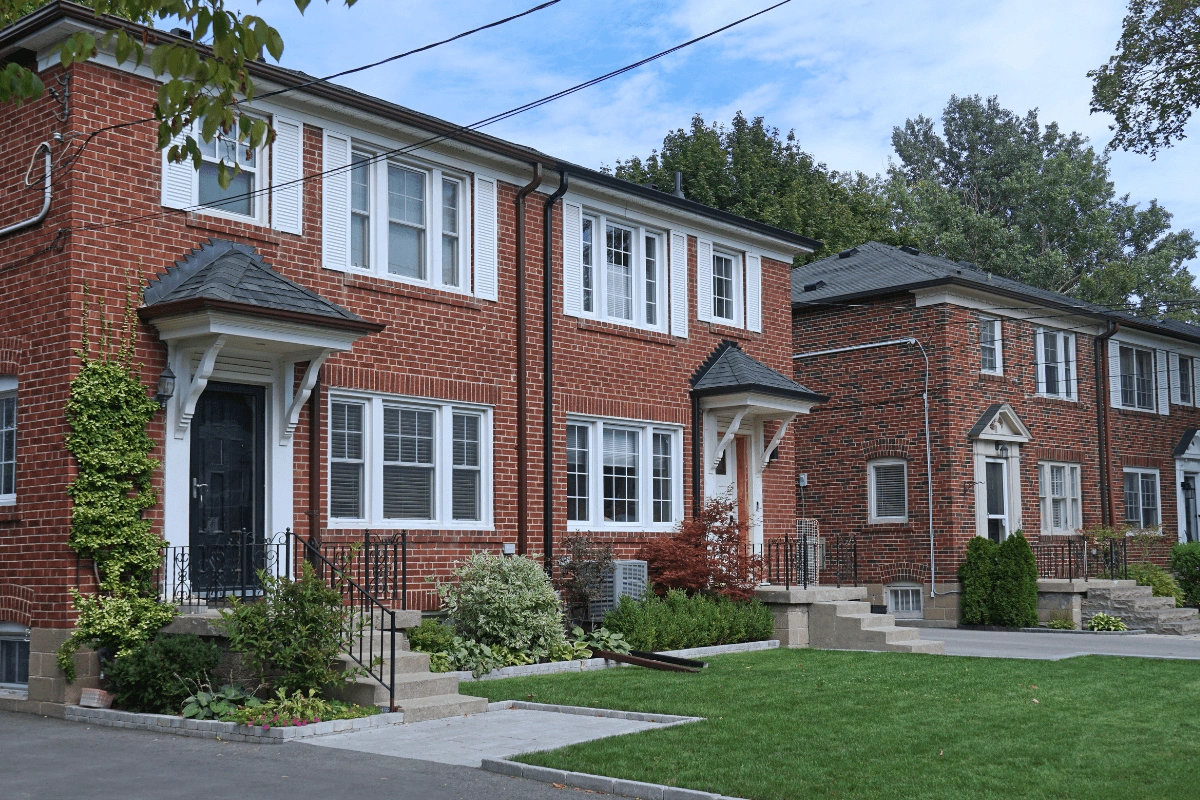
A semi-detached house is a single-family home built as one half of a pair, with the two homes joined by a shared internal wall called a party wall. The term "semi" comes from the Latin for half; each property is essentially half of a wider structure, but functions as a fully independent home.
Each home in the pair usually has:
- Its own front and back door
- Its own roof (sometimes shared, often separate)
- Its own garden, often on both sides of the party wall
- Independent utilities (gas, electricity, water, broadband)
- Its own driveway or off-street parking, where space allows
Visually, a semi-detached house is often a mirror image of its neighbour - the layouts are typically reversed so that the staircases sit back to back against the shared wall, which helps reduce noise transfer between the two homes.
A short history of the semi-d
The semi-detached format has deep roots in the UK. Pairs of joined houses appeared on country estates as far back as the 17th and 18th centuries, often built so they would appear, from the front, to be a single grand detached home. The format became truly widespread during the Victorian and Edwardian periods, when growing suburban populations needed homes that offered more space and privacy than terraced housing without the cost of fully detached construction.
The interwar period (1918 to 1939) is when the semi-d really took off. Developers built vast suburban estates of bay-fronted, three-bedroom semis across England, particularly around London and the major regional cities. Many of those 1930s properties remain among the most popular family homes in the UK today, still defining the look of countless suburbs.
What is the party wall, and why does it matter?
The party wall is the single most important feature of a semi-detached house. It is the dividing wall between the two homes and runs from the foundations up to the roof. Legally, it is jointly owned, with each homeowner having rights and responsibilities under the Party Wall etc. Act 1996 in England and Wales.
The party wall matters for three main reasons:
- Sound insulation. Older semis can suffer from noise transfer through the wall. Modern building regulations require much higher acoustic standards than those that applied in the 1930s, so newer semis tend to be quieter.
- Fire safety. Party walls in modern construction must meet specific fire resistance standards to slow the spread of fire between properties.
- Building work. If either neighbour wants to carry out works that affect the party wall (such as a side extension, loft conversion, removal of a chimney breast, or deep excavation), the Party Wall Act usually applies, and a formal notice must be served on the other owner.
We cover the practical implications of party wall rules later in this guide.
Semi-detached house vs other UK property types
The UK property market is dominated by three main house types: detached, semi-detached and terraced. Here is how they compare.
| Feature | Detached | Semi-detached | Terraced |
|---|---|---|---|
| Shared walls | None | One (party wall) | Two (one each side) |
| Typical privacy | Highest | Mid-range | Lowest |
| Garden access | Both sides, full plot | One side, plus front and rear | Front and rear only |
| Off-street parking | Usually available | Often available | Less common |
| Maintenance cost | Highest | Mid-range | Lowest |
| Energy efficiency | Hardest to heat | Mid-range (one shared wall reduces heat loss) | Most efficient (two shared walls) |
| Typical price | Highest | Mid-range | Lowest |
Detached house vs semi-detached house
The detached house vs semi-detached house comparison is the one most buyers focus on, because the two formats are functionally similar but priced very differently. Both offer space, gardens and privacy, but the absence of a shared wall in a detached home means more flexibility for extensions, no party wall agreements, and no risk of noise transfer through a neighbour's wall.
The trade-off is cost. According to the UK House Price Index, in February 2026, the average semi-detached house in England cost £289,000, while detached homes cost considerably more on average. For many buyers, the semi-d offers most of the practical benefits of a detached home at a substantially lower price.
Semi-detached house vs terraced house
A semi-detached house sits between a terraced house and a detached home in both layout and price. Terraced houses share walls on both sides, which makes them cheaper to heat and usually cheaper to buy, but they offer less privacy and less side access to the garden. Semis usually have a small strip of land on the unattached side, which allows easier access to the rear garden and creates room for a side extension if planning rules permit.
Average prices for a semi-detached house in 2026
According to the UK House Price Index published by HM Land Registry and the Office for National Statistics, semi-detached houses have been one of the better-performing property types in the year to February 2026.
| Region | Average semi-detached price (Feb 2026) | Annual change |
|---|---|---|
| England | £289,000 | +2.6% |
| Wales | £210,000 | +3.2% |
| Scotland | £213,000 | +4.1% |
In England, semi-detached houses showed the highest annual percentage change out of all property types in the 12 months to February 2026. In Wales, semi-detached and terraced houses had the joint highest annual inflation across all property types. In Scotland, semi-detached houses had the highest annual growth of any property type.
Within each country, regional variation is significant. In London, average prices for a semi-detached home are well above the national average, while in many parts of the North East, North West and Wales, the same format can cost considerably less. You can search local sold prices for any postcode using HM Land Registry's house price search tool.
Pros and cons of buying a semi-detached house
The semi-d has remained popular for nearly a century, which is partly down to the balance it strikes between space, cost and community. It is worth weighing the strengths against the limitations honestly.
Pros
| Advantage | Why it matters |
|---|---|
| More affordable than a detached home | Lower entry point for buyers wanting outdoor space and parking |
| More privacy than a terraced house | Only one shared wall, garden access on one side |
| Family-friendly layouts | Most semis have 2 to 4 bedrooms with gardens, suiting growing families |
| Strong resale demand | Consistently one of the most sought-after property types in the UK |
| Scope for extension | Side and rear extensions, plus loft conversions, are often viable |
| Decent energy efficiency | The shared wall reduces heat loss compared with a fully detached home |
Cons
| Consideration | What to look out for |
|---|---|
| Potential noise from neighbours | The party wall transmits sound, especially in older properties with thinner walls |
| Party wall obligations | Major works require notice to your neighbour under the Party Wall Act |
| Less flexible layouts | The shared wall limits how the interior can be reconfigured |
| Shared roof in some designs | Roof issues can sometimes need a coordinated approach |
| Disputes can be more visible | Boundary, parking and extension issues are common topics for neighbour disputes |
Citizens Advice has guidance on resolving neighbour disputes if any issues do arise. In most cases, friendly early communication prevents small concerns from becoming legal problems.
Extending a semi-detached house
One of the biggest practical advantages of a semi-d is the potential to extend. The unattached side often gives space for a side return or wraparound extension, and many 1930s and post-war semis have generous rear gardens that allow for sizeable rear extensions.
Common extension routes for a semi-detached house include:
- Single-storey side extension - fills the gap between the house and the boundary on the unattached side
- Rear extension - extends the kitchen or living space into the back garden
- Wraparound extension - combines side and rear extensions
- Loft conversion - converts the roof space into an additional bedroom or office
- Two-storey side extension - significantly increases bedroom count
Some of these works can be done under permitted development rights, but many require full planning permission, especially in conservation areas or for larger projects. The Planning Portal is a useful starting point for guidance on whether permission is needed and how to apply, though you should always check your local council's specific requirements as well.
For any work that affects the party wall - which includes most side extensions, loft conversions touching the shared structure, or excavations near the neighbour's foundations - you will likely need to serve a notice under the Party Wall Act. According to the UK Government's explanatory booklet on the Act, the notice usually needs to be served at least one or two months before work begins, depending on the type of work involved. Many homeowners appoint a party wall surveyor to handle the process.
Before starting any significant works, it is sensible to speak with both a surveyor and your conveyancing solicitor to make sure you understand your obligations and that the proposed work will not create issues if you later come to sell.
Buying a semi-detached house: what to check
If you are buying a semi-detached property, a good survey is particularly important because the shared wall, shared services and shared boundary all create points of risk that you would not face in a detached home. Things worth checking include:
- Condition of the party wall, including any signs of damp or movement
- Whether previous extensions had planning permission and building regulations sign-off
- Whether any past works affecting the party wall went through the correct Party Wall Act process
- Sound insulation between properties
- Boundary lines and any history of disputes with the neighbour
- Roof condition, particularly where the roof structure is continuous with the next door
- Drainage arrangements, which are sometimes shared in older semis
Your conveyancing solicitor will raise enquiries on these points as part of the standard process. If anything unexpected comes up - missing certificates, unauthorised works or boundary irregularities - your solicitor will advise on the right course of action, which may differ depending on the lender, the survey findings and your own preferences.
Selling a semi-detached house
When it comes to selling, semis benefit from broad buyer appeal. They suit first-time buyers, growing families, and downsizers, which means there is usually a deep pool of interested viewers in most areas.
A few things help a semi-detached house sell well:
- Strong kerb appeal, since semis are often viewed from the street as a pair
- Evidence that the shared wall is in good condition and well-insulated
- Documentation for any extensions, including planning consent and building regulations
- A tidy, defined garden, especially on the unattached side, where buyers can imagine a future extension
- An honest disclosure of any neighbour or party wall history
According to GetAgent's research, the UK average estate agent fee is 1.18% plus VAT (1.42% including VAT), with fees ranging from 0.75% to around 3% plus VAT. Different agent types charge differently, and the right fee level is the one where the agent's performance justifies what they charge. Over 1.2 million UK homeowners have used GetAgent to compare local agents by real performance data: average sale time, percentage of asking price achieved and fee.
Regional sale time data from GetAgent's research illustrates how location affects the timeline:
| City | Average time to go under offer |
|---|---|
| London | 17 weeks |
| Cardiff | 13 weeks |
| Manchester | 12 weeks |
You can read more in our guide to choosing the right estate agent for your local market.
Practical takeaways
- A semi-detached house shares one wall (the party wall) with a neighbouring home and is detached on all other sides
- Sometimes called a semi-d, this is one of the most popular property types in the UK
- The semi-d sits between terraced and detached homes in space, privacy and price
- According to the UK House Price Index, semis showed the highest annual price growth of any property type in England, Wales and Scotland for the year to February 2026
- Extensions are often viable but may require planning permission and a party wall notice
- Buying a semi-detached house means paying particular attention to the shared wall, shared services and any history of works on either side
- When selling, broad buyer appeal usually means strong demand if the home is presented well
References
FAQs
A semi-detached house is a residential property that shares one wall, called a party wall, with one neighbouring home and is detached on all other sides. The two homes are typically built as a mirrored pair, with each side functioning as a fully independent home with its own front door, roof, garden and utilities. The format is one of the most common in the UK, particularly across the suburbs built during the interwar period (1918 to 1939). The shared wall extends from the foundations to the roof and is jointly owned by both households, with rights and responsibilities set out under the Party Wall etc. Act 1996 in England and Wales.
The main differences between a detached house and a semi-detached house are price, privacy and flexibility. A detached house stands alone, with no shared walls, which means more privacy, no party wall agreements, no risk of noise transfer through a neighbour's wall, and full flexibility for extensions on all sides. A semi-detached house shares one wall with a neighbour, which reduces some of that flexibility but also reduces the price significantly. According to the UK House Price Index for February 2026, the average detached home in England is substantially more expensive than the average semi-detached home. For many buyers, the semi-d offers most of the practical benefits of detached living at a more accessible price point.
Semi-detached houses have shown consistent long-term demand from a wide range of UK buyers, which tends to support resale value. According to the UK House Price Index, semi-detached houses showed the highest annual price growth of any property type in England, Wales and Scotland in the 12 months to February 2026. They suit first-time buyers, families and downsizers, which keeps the buyer pool wide. However, no property type is guaranteed to appreciate, and local factors (such as schools, transport links, employment and supply) typically matter more than the format alone. As with any property purchase, professional advice and thorough research into the local market are important before making a decision.
Whether you need planning permission to extend a semi-detached house depends on the size and type of the proposed work, the location of the property, and whether your permitted development rights are still intact. Many single-storey rear extensions, loft conversions and modest side extensions can be done under permitted development, but conservation areas, listed buildings and larger projects typically need full planning permission. The Planning Portal provides general guidance on the rules and the application routes, but your local council's planning department is the definitive source for your specific property. Most homeowners use an architect or planning consultant to confirm the route before starting work.
The Party Wall etc. The Act 1996 applies in England and Wales to certain types of building work that affect the shared wall between two properties. It covers work on an existing party wall (such as inserting steel for a loft conversion or removing a chimney breast), building new walls at the boundary, and excavating near a neighbour's foundations. If your planned work falls within the Act, you must serve a formal notice on your neighbour, usually one or two months before work starts, depending on the type of work. The Act does not replace planning permission or building regulations; all three may apply. Most homeowners appoint a party wall surveyor to manage the process correctly.
Most semi-detached houses in the UK are freehold, which means the owner owns both the building and the land it sits on. Freehold ownership is the most straightforward arrangement for a house and avoids the ongoing costs of ground rent and service charges that apply to leasehold property. However, leasehold semis do exist, particularly on larger developments where the freehold is retained by a management company or developer. Before making an offer, your estate agent and conveyancing solicitor will confirm the tenure. If a semi-detached house is leasehold, your solicitor will explain the lease length, any service charges, and any restrictions that may apply.
Noise levels in a semi-detached house depend largely on the age of the property and the quality of the party wall construction. Older semis, particularly those built before the 1960s, often have thinner party walls and less acoustic separation than modern equivalents, which can make footsteps, voices and music more audible between the two homes. Modern building regulations require much higher acoustic performance, so newer semis tend to be considerably quieter. Soundproofing improvements, such as acoustic plasterboard or independent stud walls built against the existing party wall, can significantly reduce noise transfer. Asking the seller about noise during viewings and visiting at different times of day can help you assess a specific property.
Thinking about
selling your home?
Picking the right estate agent is vital for a successful sale. GetAgent makes choosing simple. Discover the best performing agents in your area.
- Free
- Data-driven
- No obligation
Thinking about
selling your home?
Picking the right estate agent is vital for a successful sale. GetAgent makes choosing simple. Discover the best performing agents in your area.
- Free
- Data-driven
- No obligation

Compare estate agents
It takes 2 minutes.




Get in touch
020 3608 6556
Our lines are closed
We are a company registered in England & Wales, company number 09428979.
Copyright © 2026 GetAgent Limited