
- Compare agents
- Online valuation
- Explore my area
- Home toolkit
- News & guides


- Estate agents by area
- Sold house prices by area
- Estate Agent ValuationRequest an in-person valuation with an agent to discover your property's true market value.
- Online Valuation ToolGet a free instant estimate of your home's value.
- EPC CheckerFind out if your home has a valid Energy Performance Certificate.
- Listing MonitorAlready on the market? See how your online property advert is performing.
- Estate Agent Fee CalculatorSee typical local agent fees, including VAT.
- Cost of Selling CalculatorPlan your budget for agent fees, legal work and moving.
- Stamp Duty CalculatorEstimate SDLT, LBTT or LTT for your next purchase.
- Selling guides
- Estate agent guides
- Mortgage advice
- Conveyancing guides
- Property news See All News & Guides
Agent shortlist
HouseWorth
- Cost of underpinning structures
Advice about properties14 October 2025
Cost of underpinning structures
Sam Edwards
Content Marketing Manager
Estimated reading time: 5 minutes
Table of contents
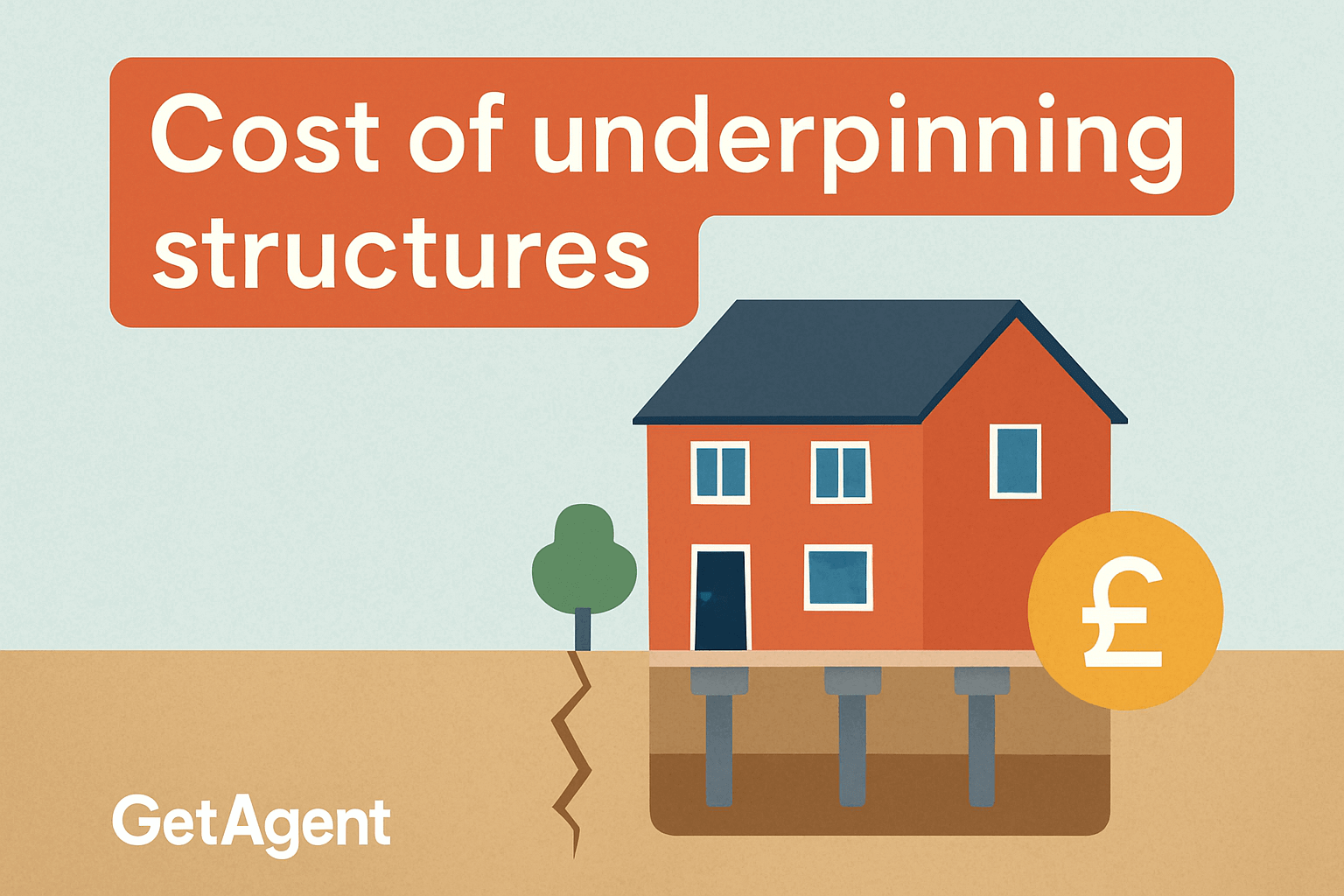
Underpinning is a structural process used to strengthen and stabilise the foundations of a building when they become weak or unstable. Whether you’re dealing with subsidence, soil movement or simply require a stronger base for an extension, underpinning can provide peace of mind by reinforcing your property’s structural integrity. However, one of the most common questions homeowners ask is: “What is the cost of underpinning?” In this article, we’ll break down the factors that influence underpinning costs, provide ballpark figures, and offer tips for keeping expenses under control.
What Factors Influence the Cost of Underpinning?
Several variables determine the final bill for an underpinning project. Understanding these will help you get accurate quotes and avoid unwelcome surprises.
Scope and Size of the Project
- Number of metres to be underpinned
- Depth of excavation required
- Accessibility of the site (e.g., garden space, proximity to neighbours)
Type of Underpinning Method
- Mass concrete underpinning (traditional “pit” method)
- Beam and base underpinning
- Mini-piled or piled underpinning
- Jet grouting
Each method has varying material, labour and equipment costs.
Ground Conditions and Soil Type
- Clay, sand or mixed soil profiles
- Presence of water tables or high groundwater levels
- Risk of encountering rock or buried obstructions
Structural Complexity
- Existing foundations’ condition
- Presence of drainage or utility lines in the excavation area
- Requirement for temporary supports or propping
Labour Rates and Contractor Experience
- Regional labour cost differences across the UK
- Specialists versus general builders
- Project management and supervision fees
Planning Permissions and Surveys
- Structural engineer’s survey and design fee
- Party-wall agreements if adjoining properties are affected
- Building control inspections and approval fees
Ballpark Figures: Underpinning Cost per Metre
Quantifying underpinning costs can be tricky, but you can use these rough estimates as a guide:
- Mass Concrete Underpinning: £1,000–£1,500 per metre run
- Beam and Base Underpinning: £1,500–£2,500 per metre run
- Mini-Piled Underpinning: £2,000–£3,500 per metre run
- Jet Grouting: £2,500–£4,000 per metre run
If your property requires underpinning around an average-sized room—say 10 metres of perimeter—you might expect:
- Mass Concrete: £10,000–£15,000
- Beam and Base: £15,000–£25,000
- Mini-Piles: £20,000–£35,000
Keep in mind these costs are indicative and can be higher or lower depending on your specific circumstances.
Additional Cost Components to Budget For
Aside from the core underpinning work, you should allow extra budget for:
• Structural Engineer’s Fees (survey & design): £500–£2,000
• Party-Wall Surveyor: £600–£1,200 per neighbour
• Building Control Fees: £200–£1,000
• Scaffolding and Site Security: £500–£2,000
• Groundworks and Drainage Repairs: £1,000–£5,000
• Redecoration, Plastering and DIY Repairs: £500–£3,000
A realistic total budget for an average project can range between £15,000 and £40,000 once these extras are included.
How to Obtain Accurate Quotes
- Research and shortlist reputable contractors with underpinning experience.
- Arrange site visits to get tailored estimates.
- Make sure quotes cover materials, labour, permits and any hidden costs.
- Ask for a breakdown of costs per metre and additional fees.
- Check for insurance (public liability and professional indemnity) and warranties.
Ways to Reduce Underpinning Costs
While underpinning is rarely inexpensive, you can take steps to manage expenses:
• Compare multiple quotes to find competitive pricing.
• Opt for mass concrete underpinning where feasible, as it’s often the most cost-effective.
• Consolidate related works (e.g., drainage repairs) into a single contract.
• Negotiate fixed-price contracts to avoid unexpected variations.
• Complete interior repairs (plastering, decorating) yourself if you’re handy.
Financing Your Underpinning Project
Underpinning is typically financed via:
- Savings or cash reserves
- Homeowner loans or personal loans
- Remortgaging your property
- Home improvement mortgages or bridging loans
Before proceeding, calculate how monthly repayments or extended mortgage terms will affect your long-term finances. Always compare interest rates and fees across lenders.
Signs You Might Need Underpinning
It pays to spot early warning signs of foundation issues:
• Cracks above windows or doors, especially wider at the top than the bottom
• Walls or floors that have become uneven or sloping
• Doors and windows that stick or don’t close properly
• Gaps between walls and ceilings or between walls and skirting boards
• Evidence of subsidence in neighbour’s properties (indicating local soil movement)
If you notice any of these, consult a structural engineer promptly to assess whether underpinning is required.
Conclusion
The cost of underpinning varies widely based on project size, ground conditions, chosen method and additional professional fees. A basic mass concrete underpinning project might start at around £10,000 for a small area, while more complex piled solutions can exceed £30,000. By understanding the factors at play, obtaining multiple quotes, and exploring cost-saving measures, you can ensure your underpinning investment delivers a stable foundation—and peace of mind—for years to come.
Thinking about
selling your home?
Picking the right estate agent is vital for a successful sale. GetAgent makes choosing simple. Discover the best performing agents in your area.
- Free
- Data-driven
- No obligation
Thinking about
selling your home?
Picking the right estate agent is vital for a successful sale. GetAgent makes choosing simple. Discover the best performing agents in your area.
- Free
- Data-driven
- No obligation

Compare estate agents
It takes 2 minutes.





Get in touch
020 3608 6556
Our lines are closed
We are a company registered in England & Wales, company number 09428979.
Copyright © 2026 GetAgent Limited